What is Computational Thinking?
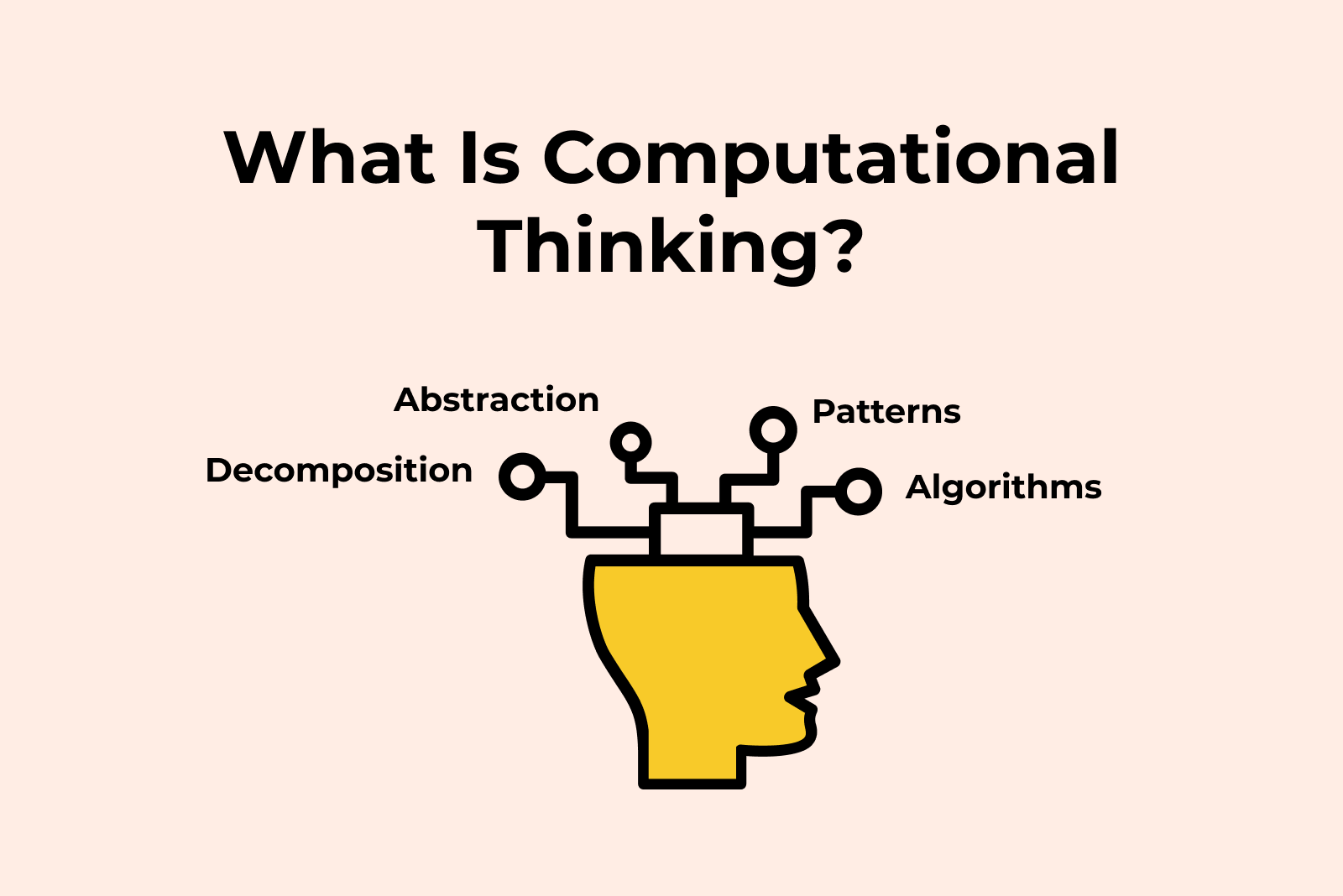
TL;DR: “Work smarter, not harder” with computational thinking. It’s a simple problem-solving approach. Computational thinking breaks down a problem into smaller ones, tries to find patterns, and makes step-by-step plans to fix the problem.
You’re working on a project, and the code suddenly stops working. There’s a bug. You’re staring at the screen, wondering, “How do I solve it?”
This is where computational thinking comes into play.
The word sounds fancy, but it’s simply a way of approaching problems. The approach is logical, systematic, and similar to how computers work. Computational thinking doesn’t ask you to memorize syntax or know a certain programming language. It’s a way of thinking.
In this article, we’ll cover the definition of computational thinking and break it down into four key pillars. We’ll also walk through some real examples and understand why computational thinking matters in a tech career.
Table of Contents
- What Are the Key Pillars of Computational Thinking?
- Examples of Computational Thinking
- Why is Computational Thinking Important?
- How to Build Computational Thinking Skills
- Cutting It Short
- FAQs
What Are the Key Pillars of Computational Thinking?
There are four foundational pillars of computational thinking. A structured combination of these pillars gives you an effective way to tackle problems.
Decomposition
Decomposition is a process of breaking down big, complex problems into manageable fragments. Instead of tackling the whole problem, you deal with one chunk at a time.
Think of it like baking a cake. You don’t add all the ingredients at once and hope it tastes delicious. You make your cake one part at a time.
Pattern Recognition
Recognizing patterns and similarities helps you save time by reusing what already works.
Abstraction
Abstraction means filtering out unnecessary details and focusing on what matters.
One great example is GPS; it filters out the trees, houses, potholes, and buildings on your route. Just shows what’s needed to go from point A to point B.
Algorithms
An algorithm is a step-by-step set of instructions for solving a problem. It’s a repeatable process. Anyone or any computer can use the algorithm and get the same result.
For example, you can read a manual to assemble a table. Following all the listed steps will result in a functional table, no matter who builds it.
Examples of Computational Thinking
Now let’s see all four pillars working together.
The Road Trip
You planned a road trip with your 3 friends, and you’re driving. All four of you decided to take a trip from New York to Los Angeles. Let’s see how computational thinking improves your trip.
- Decomposition: Taking a road trip is a big goal. You and your friends will need to split it into smaller tasks. Tasks can look like mapping the route, booking hotels, setting budgets, and packing the car.
- Pattern Recognition: It’s not your first road trip; you know how things work. You need snacks, a phone charger, and the occasional rest stop. Take what you’ve learned before and apply it to this trip.
- Abstraction: You don’t need to know every street along the way. You only have to focus on major highways and key stops.
- Algorithms: You create a day-by-day itinerary for your trip. Each day has a clear set of instructions to follow.
Applying It to a Code
Imagine you’re writing a program that identifies if a user’s password is strong enough. Here’s how you apply computational thinking in code:
- Decomposition: Break the whole program into a smaller checklist. Is it long enough? Does it have numbers? Does it have special characters? Does it have at least one capital letter?
- Pattern Recognition: You’ve seen similar logic before. You know how to use conditional statements for such programs. You apply that knowledge here.
- Abstraction: You don’t need any other information about the user. Only the password string matters to you.
- Algorithms: Write a step-by-step function. First, check the length and then the numbers. Keep going by checking special characters and then for capital letters. If everything satisfies, return “Strong”. If not, return it as “Weak.”
You used the same four pillars but in entirely different contexts. This is what makes computational thinking so powerful.
Why is Computational Thinking Important?
Computational thinking is a skill that powers everything in tech. You’re using it even when you don’t realize it. Let’s go over a few reasons why computational thinking is important:
Learn to Code Easier
Learning any programming language can feel overwhelming at the start. Languages like Python are easier, yet can feel heavy at times. Computational thinking provides a framework before you even start writing code.
Helps You Write Better Code
Computational thinking doesn’t just help you kickstart. It also helps you write fully functioning code.
Relevancy Beyond Programming
Computational thinking is not solely reserved for developers. People across various fields use computational thinking to work more efficiently. UX designers use it to map flows. Data analysts use it to filter their queries. Project managers use it to deal with timelines. Computational thinking can help with a lot of tech careers.
Employers Actually Look For This Skill
For tech roles, employers look for problem-solving skills. Computational thinking is the most structured problem-solving skill.
How to Build Computational Thinking Skills
Computational thinking is a skill, and there are ways to improve this skill set. Here are a few tips:
- Start with simple coding exercises: You can’t build a whole app on day one. Start small with beginner-level exercises that ask you to solve a single problem at a time. You can build up to more advanced problems as you learn more about programming.
- Practice logic-based Python exercises: Practice exercises that ask you to write functions, loop through data, or filter a list.
- Talk through your problem-solving process: Collaborate with your peers! Explain your reasoning with a peer or a mentor. It forces you to stop and talk through each step. Practicing this skill can also help you discuss your work in future interviews.
- Reflect on how you solve everyday problems: Computational thinking isn’t just limited to coding. Pay attention to how you use it to break down your daily tasks.
- Be patient with the learning curve: You can’t master any skill overnight. If you’re learning to code and practicing computational thinking side-by-side, expect things to feel slow at first. No one can become a web developer in the blink of an eye.
Cutting It Short
Computational thinking is a problem-solving approach that helps you break down big problems into small, manageable tasks. It’s a valued skill in tech careers. You can build problem-solving skills through practice, reflection, and solving real coding problems.
You don’t need any prior experience; all you need is determination. If you’re ready to use your computational skills in the real world, try creating web apps using Python. This way, you’ll practice problem-solving through projects and build employable skills.
FAQs
What Are the Four Types of Computational Thinking?
The four types of computational thinking are decomposition, pattern recognition, abstraction, and algorithms.
What Is the Difference Between AI and Computational Thinking?
Computational thinking is a human problem-solving skill. However, AI (Artificial Intelligence) is a technology that uses computational thinking principles to imitate human-like decision-making.
Can Anyone Learn Computational Thinking?
Yes, anyone can learn computational thinking. It’s a skill that is built through practice.